18.06.2026
 Back to home page
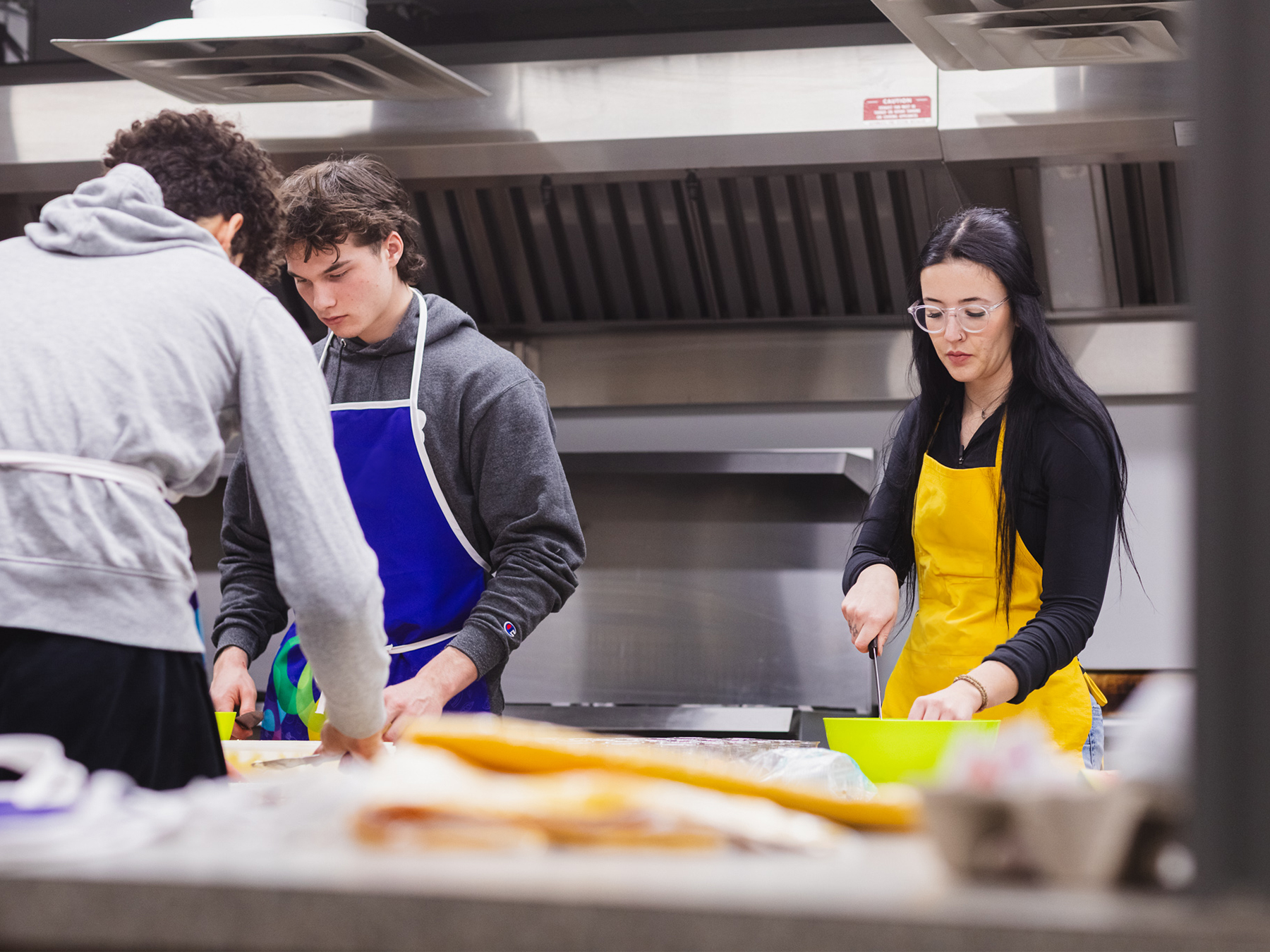
Providing breakfast to children at school every morning obviously starts with supplying nutritious and varied foods. But behind every meal served, you’ll find a functional kitchen, a reliable freezer, adequate storage space, and often, a vehicle used to transport the food to the establishment.
It was precisely to meet these needs that the School Food Infrastructure Fund (FIAS), established by Agriculture and Agri-Food Canada, was created.
This program supports organizations that offer school meal programs by helping them acquire the equipment and infrastructure needed to produce, prepare, process, store, and distribute food safely and efficiently. Industrial refrigerators, cold storage rooms, kitchen equipment, and delivery vehicles: these are all investments that enable programs to increase their reach and efficiency.
Breakfast Club of Canada was selected as the fund’s primary distribution partner across the country. Some $5 million has been allocated to 39 organizations in six provinces. Additional funds, recently injected, will bring the total to $6 million by the end of 2026.
Beyond managing the funding, the Club has supported organizations throughout the process to ensure that projects meet the real needs of the communities they serve.
The impact can already be felt. Thanks to projects supported by the FIAS, 330 new schools have been supplied, the number of students reached has increased by 47%, and more than 84,000 additional meals are now distributed each day.
In Saskatchewan, financial support provided to the Saskatoon Public Schools Foundation enabled the purchase of essential refrigeration, cooking and food preparation equipment to increase meal production.
By modernizing two key facilities, the organization is now able to serve all 58 schools in its district+. As a result, more than 2,000 additional students have access to a nutritious meal every day.
In Sainte-Anne-des-Monts, Québec, Récup. alimentaire Haute-Gaspésie carried out an ambitious project by developing a food processing kitchen as well as refrigeration and freezing spaces in a new building.
Despite completely relocating its facilities, the team maintained uninterrupted service to schools. Today, the organization has increased capacity to recover, process, preserve, and distribute food throughout its vast territory.
For the Camrose Neighbour Aid Center, the challenge was simple: without reliable logistics, it’s impossible to reach more students.
The purchase of a delivery vehicle and food preservation equipment now allows the organization to expand its reach and provide more reliable service to schools in its community. A concrete demonstration that transportation is an integral part of the solution to food insecurity.
These examples illustrate the FIAS’s ability to adapt to very different realities.
A high-performance freezer reduces food waste. A well-equipped kitchen makes it possible to prepare higher-quality meals. A delivery truck helps supply schools that would otherwise have no access to the service.
These investments are less visible than the meals themselves, but their impacts are significant. They enable organizations to serve more children, more efficiently and over a longer period.
Nurturing children’s potential begins even before food is served. Behind every breakfast lies an entire network of people, equipment and partners working together to make a difference.
ℹ️To learn more about the School Meal Infrastructure Fund and the projects it supports, contact Yann Laurin.