Your stories, Inspiring ideas
19.02.2026
 Back to home page
 Back to home page
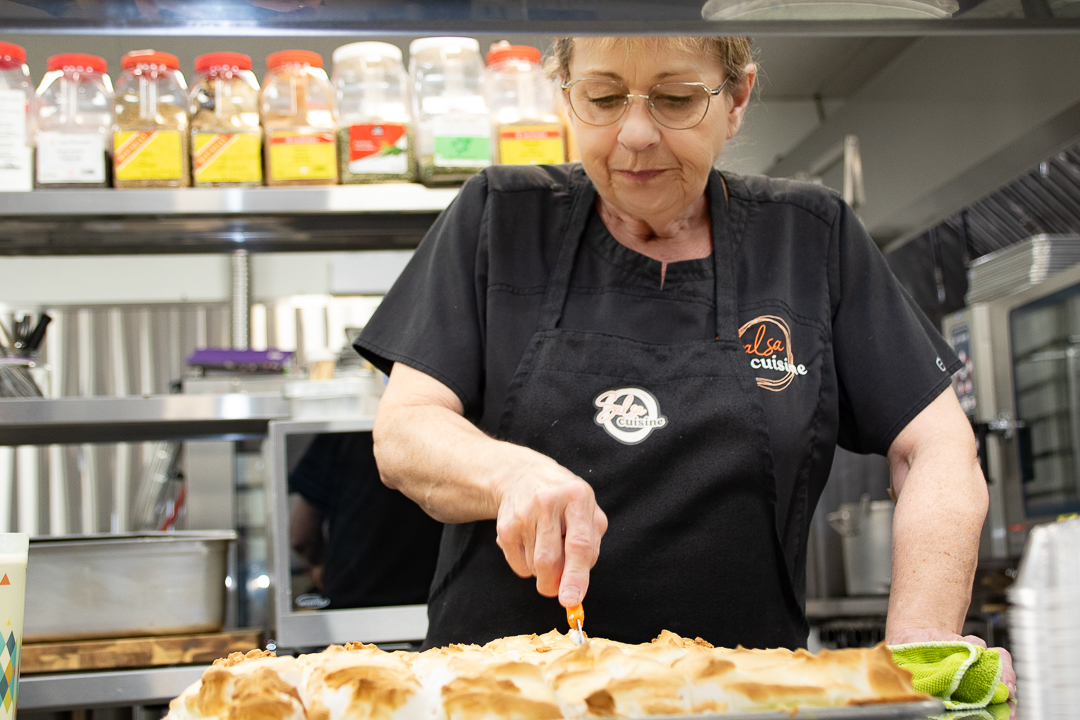
For the past five years, a partnership has been transforming far more than Saguenay–Lac-Saint-Jean school menus.
The SALSA (Service d’accès local en sécurité alimentaire) project was launched thanks to a strategic investment by Breakfast Club of Canada, supported by federal funds from the Department of Agriculture. The goal was clear: to create a true food services hub, bringing together a community grocery store, a warehouse, a collective kitchen, and the processing of food recovered from local businesses and farmers.
The Service d’intervention de proximité du Domaine-du-Roy (SIP-DDR), in collaboration with several regional partners—the Public Health Directorate of the Saguenay–Lac-Saint-Jean CIUSSS, UQAC, Coop Chambord and Résidence Labrecque—swiftly developed “SAC,” which stands for services d’alimentation communautaire, or community food services. This vital link now provides meals to 11 schools supported by the Club in Saguenay–Lac-Saint-Jean, allowing 1,108 students to start each school day with a nutritious meal.
The complementary nature of this partnership is what makes it so special:
• the Club provides protein sources;
• SIP-DDR/SALSA organizes the supply of fruits, vegetables and cereal products.
The result? Each year, children enjoy over 210,000 balanced breakfasts made with local products, while benefiting from a long-term vision aimed at making the management of the region’s school food programs autonomous.
This collaboration led to the creation of the Suggestion Box (in French only), a practical guide that helps schools and communities set up local sourcing projects to support school meals. This tool is the result of a research project conducted by UQAC, under the supervision of Salmata Ouedraogo, Ph. D., with financial support from the Lucie and André Chagnon Foundation and Quebec’s Ministère de l’Économie, de l’Innovation et de l’Énergie.
Drawing on the experience gained by Saguenay–Lac-Saint-Jean stakeholders in the field, the Suggestion Box offers concrete ideas based on what’s already working as well as an analysis of the issues, challenges and practices observed in the region’s school food programs.
Breakfast Club of Canada is deeply grateful to all those who have chosen to build and document this promising project, supporting it with conviction, from both a human and a financial standpoint.
For Mathieu Laroche, CEO of SALSA, this adventure has been an incredible learning experience:
“There’s a lot more than meets the eye to setting up a school food service, since no one-size-fits-all template exists. Every community is different. What works is when we collaborate with the community, not when we show up with a ready-made set solution.”
At its core, the Suggestion Box (in French only) is meant to be a tool for transferring expertise. It contains 12 practical fact sheets covering the key steps for setting up a local school food program: governance, operations, partnerships, menus, logistics, continuous improvement and more.
It’s the handiest of toolboxes for communities looking to get started!
With the partnership between the Club and SIP-DDR/SALSA, the results speak for themselves: community engagement can amplify the impact of school food programs: improved infrastructure, short supply chains, local processing and distribution, and an expanded social safety net.
But more than anything, this collaboration has yielded unexpected moments of connection, as Mathieu explains:
“Seniors at a retirement home chop fruit and vegetables, students go pick up this produce on behalf of the school, and the next thing you know, it’s smiles, exchanges and connections all around. Who would have thought that feeding children would help bridge the generation gap?”
Hopes are high: The organizers would like to regionalize support, transfer expertise, integrate more local products, make menus more plant-based, support caterers and develop tools. After all, these meals don’t just feed kids—they nourish and strengthen the fabric of an entire community.