20.07.2026
 Back to home page
Introducing new foods may seem difficult, but it is an essential step in encouraging children to develop sustainable eating habits. Did you know that a child may need to be exposed to a food an average of 10 times before learning to like it? This is completely normal. Children’s tastes are still developing, and patience is key.
A great way to familiarize children with a new food is to mix it with a food they already like. For example, add small pieces of fruit to yogourt or mix a vegetable into an omelette. This approach reduces resistance and helps children explore new flavours without pressure.
Talking about the food can spark curiosity. Explain where it comes from, how it grows, and how it can be used in the kitchen. Understanding the history and origin of a food helps children feel involved and motivated to try it.
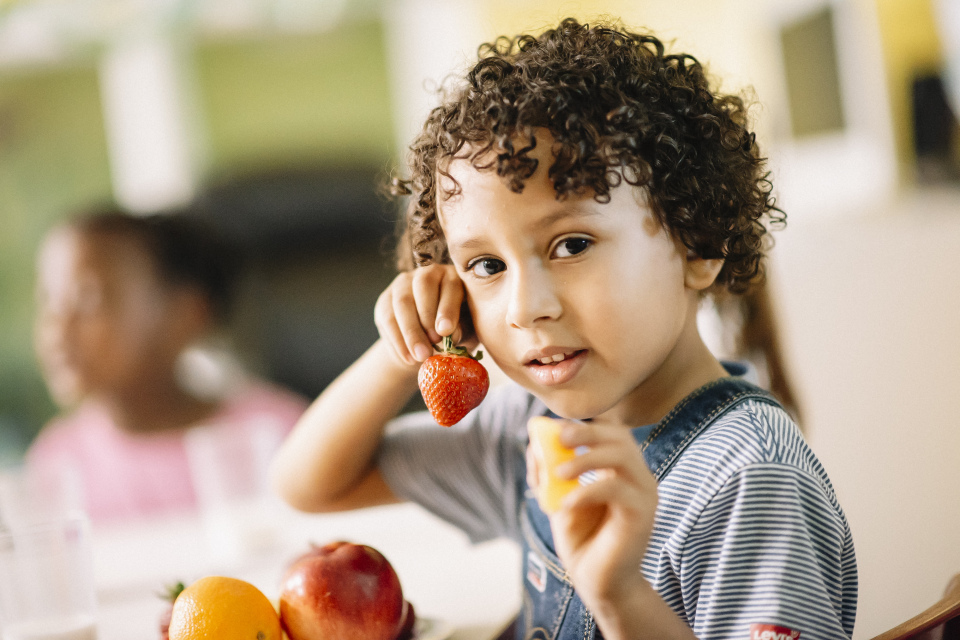
Encourage children to observe, touch, smell, and taste the food. Turning food discovery into a sensory experience makes learning fun and memorable.
Never pressure children to taste a food. Simply observing, touching or asking questions is already an important step. Make each tasting a joyful and safe experience where curiosity is valued.
Children learn by observing adults. Try new foods with them and present each item with enthusiasm. Your curiosity is contagious and encourages children to try new foods on their own.
Applying these tips in your school breakfast program or at home can transform each meal into a moment of learning and discovery. It can help children develop a positive relationship with food, become more open to trying new foods, and build sustainable eating habits.
Every bite is a chance to discover, learn, and grow.